How Augmented Reality Is Changing Every Industry
How Augmented Reality Is Changing Every Industry
Augmented reality once seemed like science fiction. Today, it is already part of shopping apps, games, classrooms, medical technology, and digital collecting.
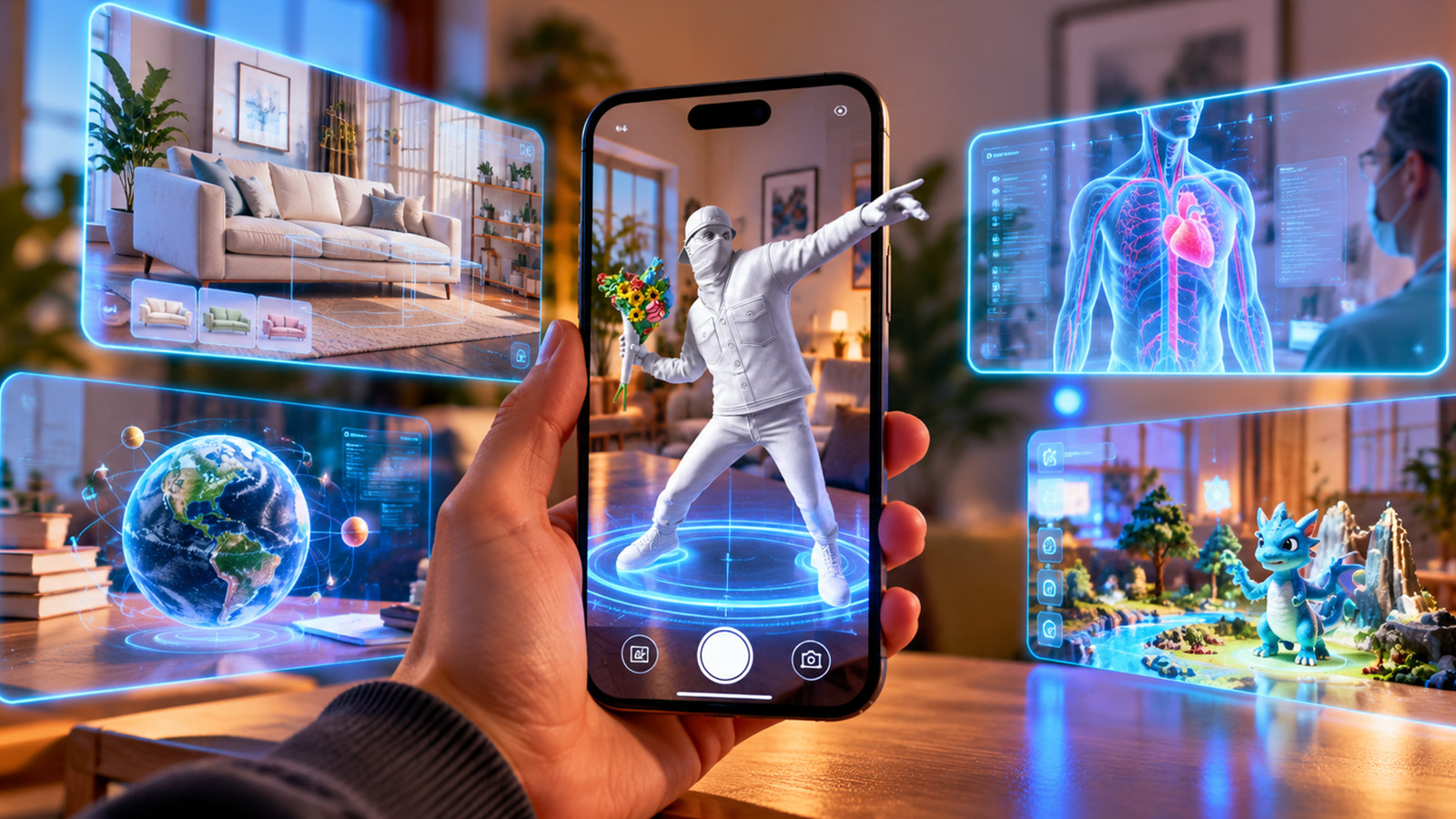
AR works by adding digital objects or information to your view of the real world, usually through a smartphone, tablet, display, or headset. That flexibility is a big part of its appeal. The same basic technology can help someone see how a new couch fits in their living room, let a student examine a 3D model, assist a medical professional during a procedure, or bring a digital collectible into their surroundings.
As AR becomes easier to access, more industries are finding practical ways to use it.
How AR Is Changing the Entertainment Industry
AR is giving entertainment creators new ways to take experiences beyond the screen.
Games, films, and other experiences can add digital elements to the world around us, giving audiences more ways to interact with a story, game, or character.
Pokémon GO brought location-based AR gaming to a huge audience, while Disney experimented with AR storytelling in its 2022 short film Remembering. A companion AR experience allowed Disney+ viewers to scan their TV and extend the film’s “World of Imagination” into their living room.
Collecting is part of that shift too. Platforms like VeVe use AR to let collectors place digital collectibles into their surroundings, create scenes, and capture photos and videos with them. It gives collectors another way to interact with the characters and pieces in their collection.



How AR Is Changing the Retail Industry
AR is making it easier to answer one of online shopping’s biggest questions: what will this actually look like when it arrives?
Shoppers can preview products in their own space or virtually try items before deciding what to buy.
IKEA Kreativ, for example, lets shoppers photograph or scan their room, remove existing furniture digitally, and experiment with IKEA products in the space. IKEA also offers 3D room-building tools for testing layouts before buying.
Amazon’s View in Your Room offers a similar experience for eligible products. Shoppers can use their phone to preview furniture, décor, appliances, and other items at home and get a better idea of how they will look and fit.
For online shopping, that takes some of the guesswork out of buying something you have never seen in your own space.
How AR Is Changing Healthcare
Some of AR’s most practical applications are emerging in healthcare.
One example is vein visualization. AccuVein uses near-infrared technology to create a real-time image of superficial veins and project it directly onto a patient’s skin, helping healthcare professionals assess veins for procedures such as peripheral venous access.
AR is also being used and explored in areas including surgical planning, intraoperative procedures, diagnostics, telemedicine, and rehabilitation. The FDA says AR and VR medical technologies could help healthcare professionals prepare for treatments, make some procedures less invasive, and accelerate diagnosis in appropriate applications.
Here, the value of AR is very practical: putting useful information where a healthcare professional can see it when they need it.
How AR Is Changing Education
AR can make learning more visual by bringing 3D models and illustrations into the space around a student.
Instead of seeing a planet, molecule, or piece of anatomy from one fixed angle on a page, students can explore digital models from different perspectives and better understand how different parts fit together.
The same idea can make reading more interactive too. VeVe has offered an AR comic reader that lets readers experience digital comics in augmented reality, adding another way to interact with a page and its artwork.
How VeVe Is Bringing AR to the Collectibles Industry
Collectors have always cared about how a piece looks when it is finally part of their collection. AR gives digital collectors another way to play with that idea.
On VeVe, collectors can place digital collectibles into real-world surroundings. A character can stand on your desk, appear life-sized outside, or become part of a scene you create for a photo or video.
Select digital collectibles also include animations and other interactive features, giving collectors even more ways to experience individual pieces. VeVe’s current public materials describe interactive collectibles that can include features such as movement, weapons, or sound.
You can experiment with scale and placement, build scenes around your collection, capture photos and videos, and share what you create.
That is where AR fits naturally into collecting: it gives a digital piece somewhere to exist beyond the collection screen.
Sign up for VeVe today and start exploring digital collectibles from the brands you love.