The Complete History of the First Jurassic Park Movie
The Complete History of the First Jurassic Park Movie
There are few movie moments as unforgettable as seeing a living dinosaur walk across the screen for the very first time. From the towering Brachiosaurus to the terrifying Tyrannosaurus rex, Jurassic Park captured the imagination of millions and transformed dinosaurs from museum exhibits into cinematic icons.
More than 30 years later, the film remains one of the most influential blockbusters ever made. But when was Jurassic Park actually made? The answer goes far beyond its 1993 release date. From Steven Spielberg securing the rights to Michael Crichton’s bestselling novel to groundbreaking visual effects that changed Hollywood forever, the journey to bring Jurassic Park to life was almost as remarkable as the movie itself. Here’s the complete history of how the first Jurassic Park became a cinematic landmark.
When Did the First Jurassic Park Come Out?
The first Jurassic Park movie premiered on June 9, 1993, at the National Building Museum in Washington, D.C., before opening in theaters across the United States on June 11, 1993. Directed by Steven Spielberg and based on Michael Crichton’s bestselling 1990 novel of the same name, the film quickly became one of the biggest cinematic events of the decade.
Audiences were captivated by its realistic dinosaurs, thrilling story, and groundbreaking visual effects. Jurassic Park went on to earn more than $900 million at the worldwide box office during its original release, making it the highest-grossing film of all time until Titanic surpassed it in 1998. It also won three Academy Awards for Best Visual Effects, Best Sound, and Best Sound Effects Editing, cementing its place as one of Hollywood’s most influential blockbusters.
When Was Jurassic Park Made?
Although Jurassic Park debuted in theaters in 1993, the journey to bring the film to life began years earlier. After reading Michael Crichton’s unpublished manuscript, Steven Spielberg quickly recognized its potential and secured the film rights before the novel even reached bookstore shelves. Universal Pictures officially announced the project in 1990, with pre-production beginning soon after.
Principal photography took place from August 24, 1992, through November 30, 1992, with filming split between locations in Hawaii and California. Once production wrapped, the team spent several more months completing visual effects, editing, sound design, and the now-iconic musical score by John Williams. By the time Jurassic Park arrived in theaters on June 11, 1993, nearly two years of planning, filming, and post-production had gone into creating one of the most ambitious movies Hollywood had ever seen.
How Steven Spielberg Brought Jurassic Park to Life
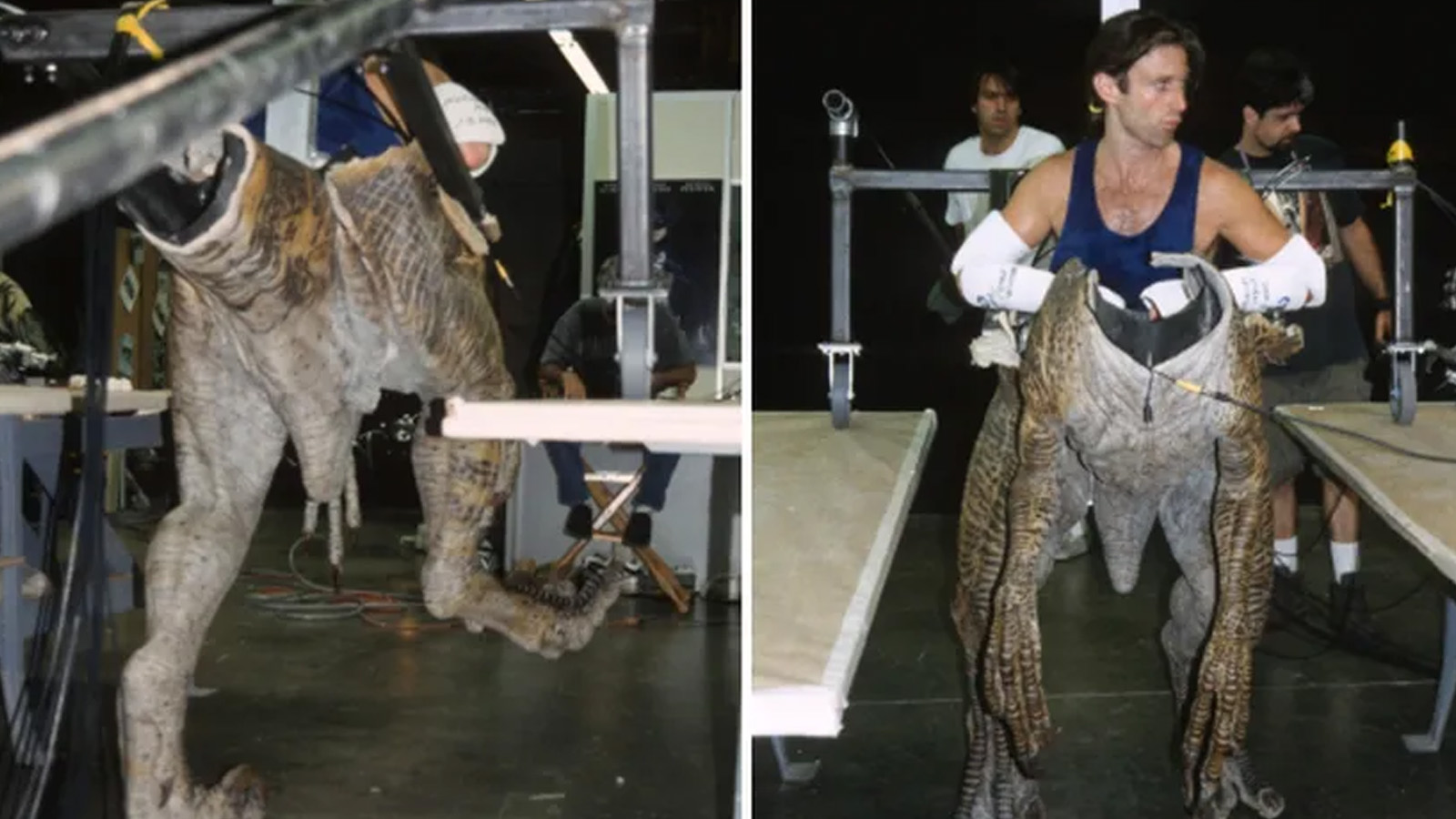
Steven Spielberg combined cutting-edge innovation with traditional filmmaking techniques to make Jurassic Park feel believable. While Stan Winston Studios built life-sized animatronic dinosaurs for close-up scenes, Industrial Light & Magic pushed the boundaries of computer-generated imagery to create dinosaurs that moved with remarkable realism. Spielberg blended these practical and digital effects with Michael Crichton’s compelling story, Dean Cundey’s cinematography, and John Williams’ unforgettable score, creating an immersive experience that forever changed what audiences believed was possible on the big screen.
Where Was Jurassic Park Filmed?
Jurassic Park was filmed across several locations in Hawaii and California, with the lush landscapes of Kauai serving as the fictional Isla Nublar. Iconic locations such as Manawaiopuna Falls, Limahuli Garden, and Kipu Ranch provided the film’s tropical backdrop, while additional scenes and soundstage work were completed at Universal Studios in California. During production, Hurricane Iniki struck Kauai, temporarily halting filming and forcing the cast and crew to shelter in place, adding another unforgettable chapter to the movie’s already remarkable production history.
How Long Did It Take to Make Jurassic Park?
From early planning to its theatrical release, Jurassic Park took nearly two years to complete. Principal photography lasted just over three months, but the film’s groundbreaking visual effects required months of additional work as Industrial Light & Magic refined computer-generated dinosaurs that set a new standard for Hollywood. Combined with extensive animatronic work, editing, sound design, and John Williams’ legendary score, the production became one of the most ambitious filmmaking efforts of its era.
Why Jurassic Park Changed Movies Forever
Jurassic Park proved that computer-generated visual effects could create believable, emotionally engaging creatures without replacing practical filmmaking. By seamlessly blending CGI with life-sized animatronics, Steven Spielberg set a new standard that influenced countless films, from fantasy and science fiction to superhero blockbusters. More than 30 years later, its impact can still be seen across Hollywood, while its unforgettable dinosaurs continue to inspire new generations of fans through movies, television series, games, theme park attractions, and collectibles.
Explore Jurassic Park Collectibles on VeVe
The adventure doesn’t end when the credits roll. On VeVe, fans can discover officially licensed Jurassic Park digital collectibles inspired by one of cinema’s most iconic franchises. Bring legendary dinosaurs into your space with augmented reality, build immersive virtual showrooms, and grow your collection alongside fellow fans from around the world.
Whether you’ve admired Jurassic Park since its original 1993 release or recently discovered the franchise, VeVe offers a new way to celebrate its unforgettable legacy. Sign up today to explore officially licensed Jurassic Park collectibles and take your collection to the next evolution.