Top 10 Black Panther Comic Book Covers in 2026
Top 10 Black Panther Comic Book Covers in 2026
Black Panther covers have always carried a different kind of weight.
The best ones aren’t just cool images of T’Challa in the suit — they capture royalty, legacy, Wakanda, technology, danger, and the pressure of being both a hero and a king. Some covers matter because they mark a first appearance. Others stand out because they capture a turning point for T’Challa, Shuri, or the Black Panther mantle itself.
In 2026, with Black Panther celebrating 60 years of Marvel history, it’s a good time to look back at the covers every fan and collector should know.
This isn’t meant to be a strict ranking. Think of it as a curated journey through Black Panther comics, from the first appearance of Wakanda to the covers that helped define how readers see the character today.
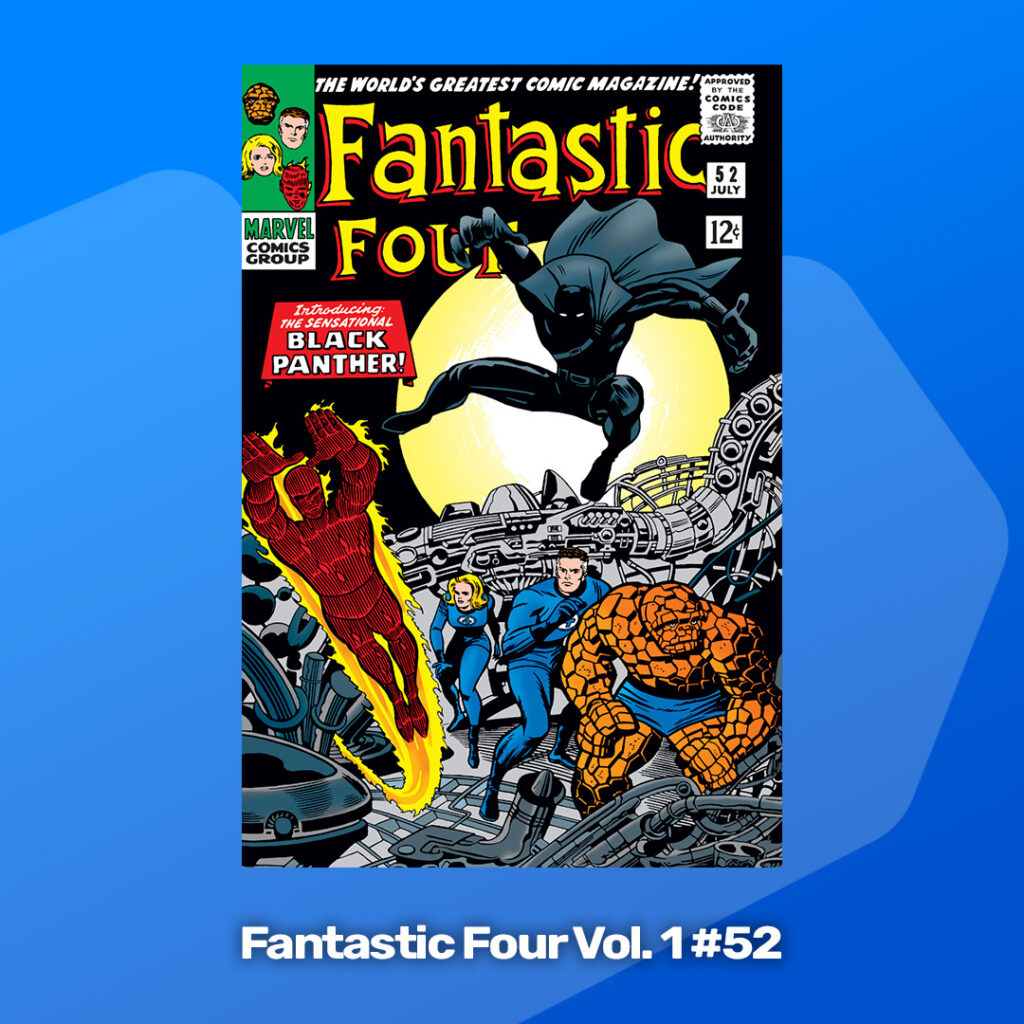
Fantastic Four Vol. 1 #52
This is where the Black Panther story begins.
Published in 1966, Fantastic Four #52 introduced T’Challa, the Black Panther, along with the nation of Wakanda. That alone makes it one of the most important Black Panther comics ever published, but the cover earns its place on its own merits. Jack Kirby puts Black Panther in motion, descending on the Fantastic Four with confidence, mystery, and danger — someone who feels like he’s been waiting in the shadows of the Marvel Universe, ready to change the scale of the story the moment he shows up.
Collectors will always come back to this one. It’s the first step into Wakanda.
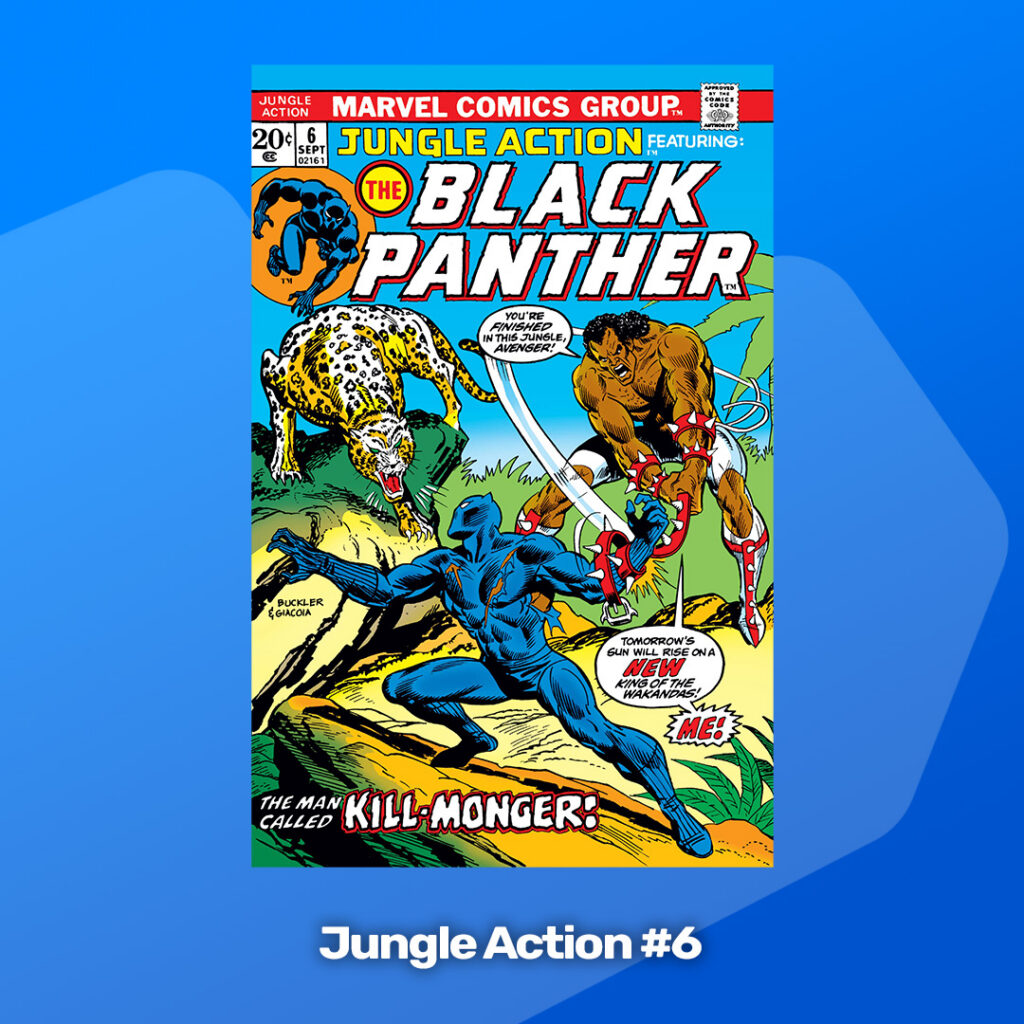
Jungle Action #6
By 1973, Marvel was ready to let Black Panther carry a story that had nothing to do with the Fantastic Four.
Jungle Action #6 begins the famous Panther’s Rage storyline and introduces Erik Killmonger, one of Black Panther’s most important enemies. Rich Buckler’s cover has a different kind of energy than Black Panther’s debut — less a guest star stepping into someone else’s adventure, more a hero being pulled into conflict tied directly to Wakanda, power, revenge, and personal history.
Fantastic Four #52 introduced Black Panther to Marvel readers. Jungle Action #6 proved he could carry a bigger, more emotionally charged story of his own — and the cover makes that case before you even know the history behind it.
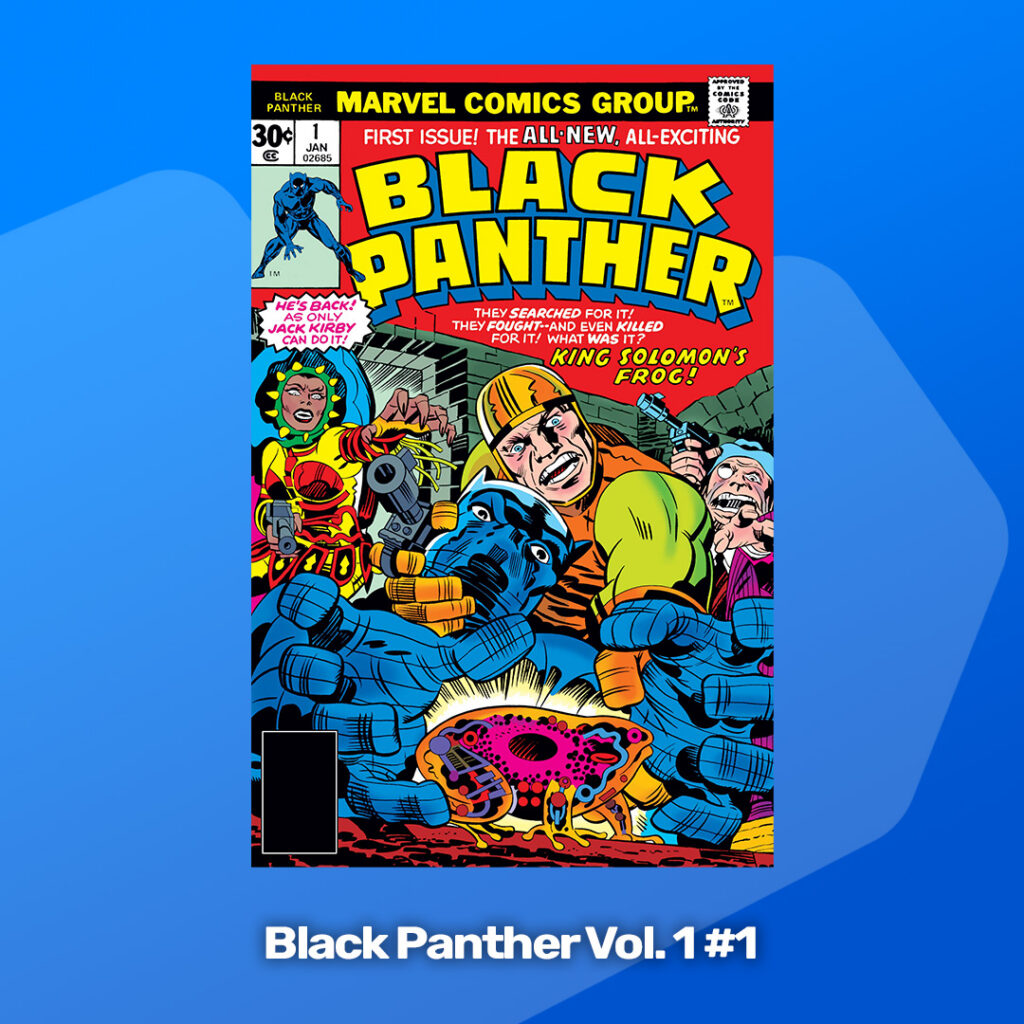
Black Panther Vol. 1 #1
Kirby didn’t just create Black Panther in 1966 — eleven years later, he came back to give the character his own book.
Published in 1977, Black Panther #1 launched T’Challa’s first self-titled series, and the cover has that unmistakable Kirby energy: bold, strange, kinetic, full of motion. He’s no longer being introduced through the Fantastic Four or framed through someone else’s team. His name is on the masthead.
It’s a genuinely key moment in Black Panther’s publishing history — the shift from major Marvel guest star to solo lead, with a world about to expand well beyond a handful of issues.
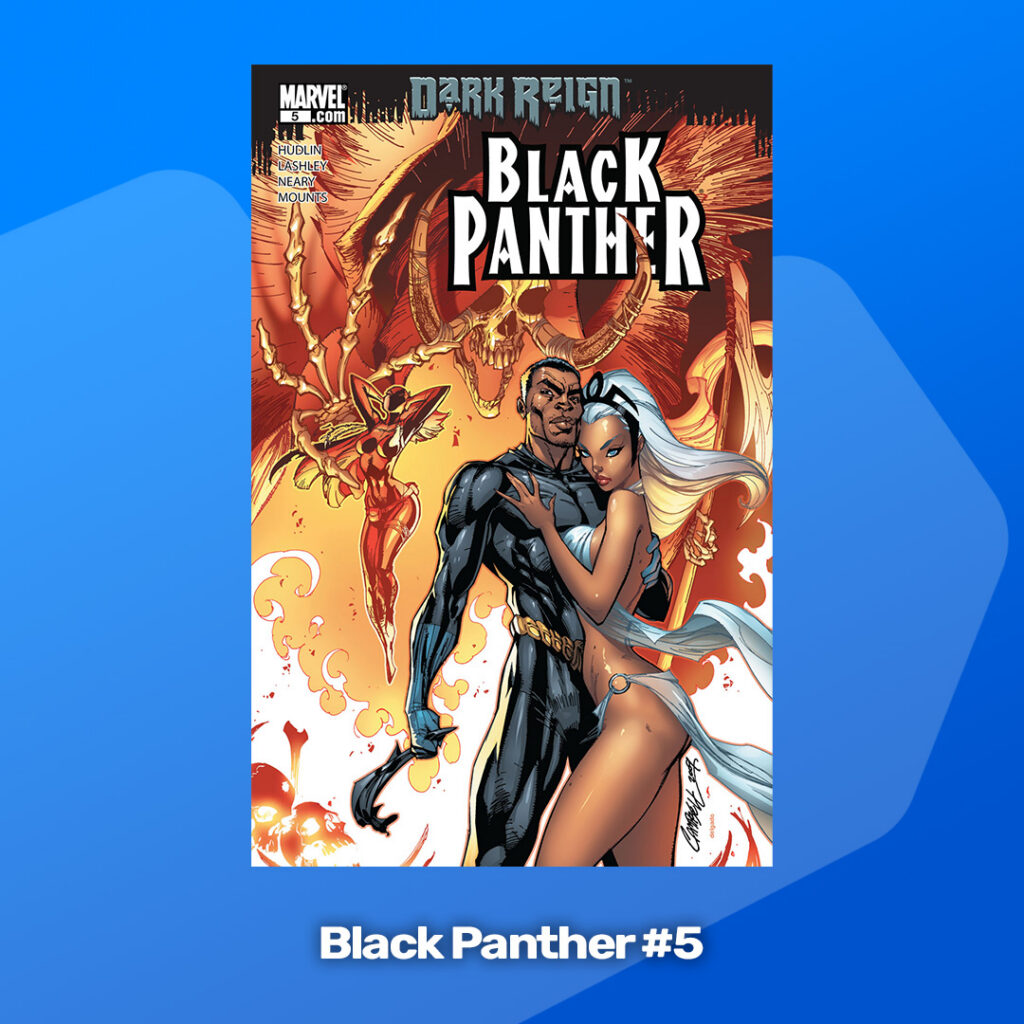
Black Panther #5 — Shuri as Black Panther
Not every Black Panther cover features T’Challa, and this one is proof the mantle was never just about him.
Published during the 2009 Black Panther series, this issue is one of the key ones tied to Shuri stepping into the role. The cover puts her directly in it, front and center, making the point that Black Panther is bigger than one person — a responsibility connected to Wakanda, family, duty, and sacrifice. Shuri doesn’t read as someone borrowing T’Challa’s identity. She reads as a character claiming a legacy on her own terms.
For anyone who mainly knows Shuri from film and animation, this is a useful reminder that her comic history has real weight behind it — brilliant, sharp, stubborn, and more than capable of carrying the name.
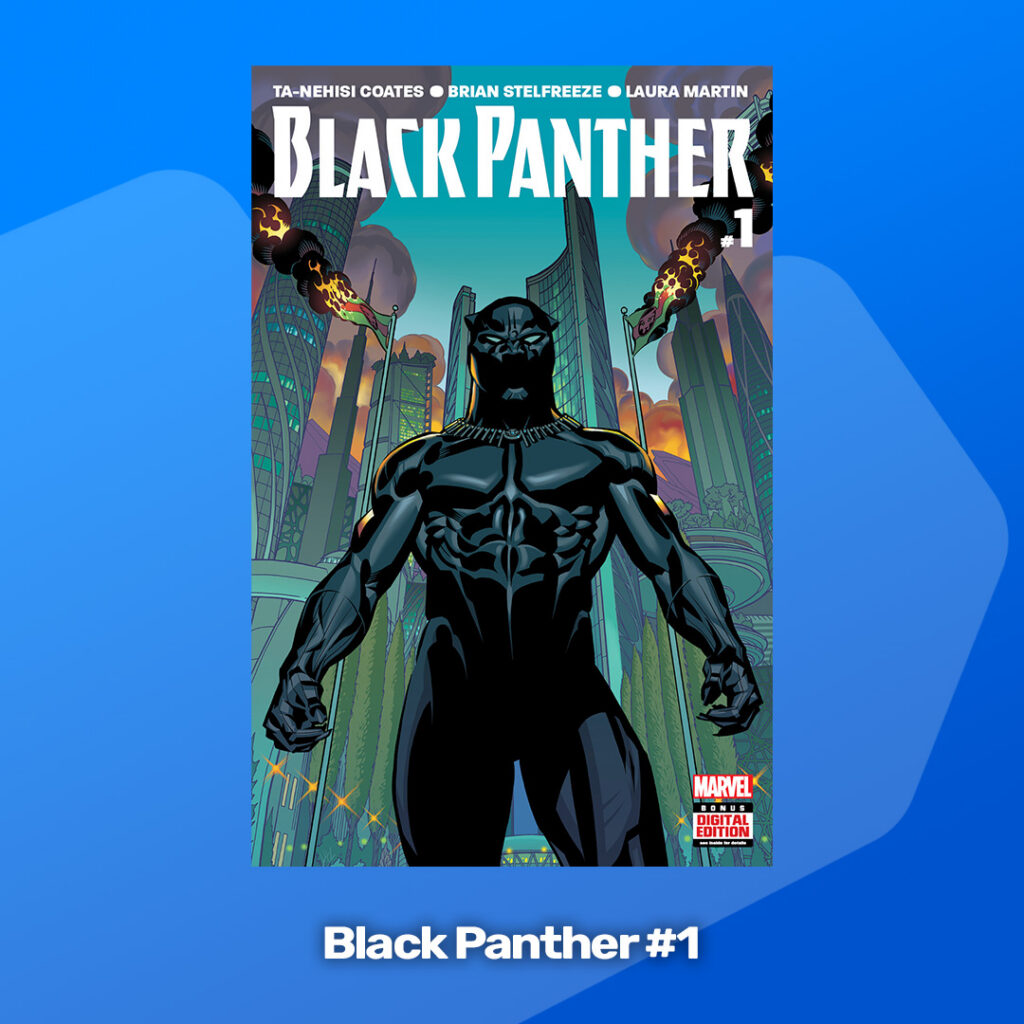
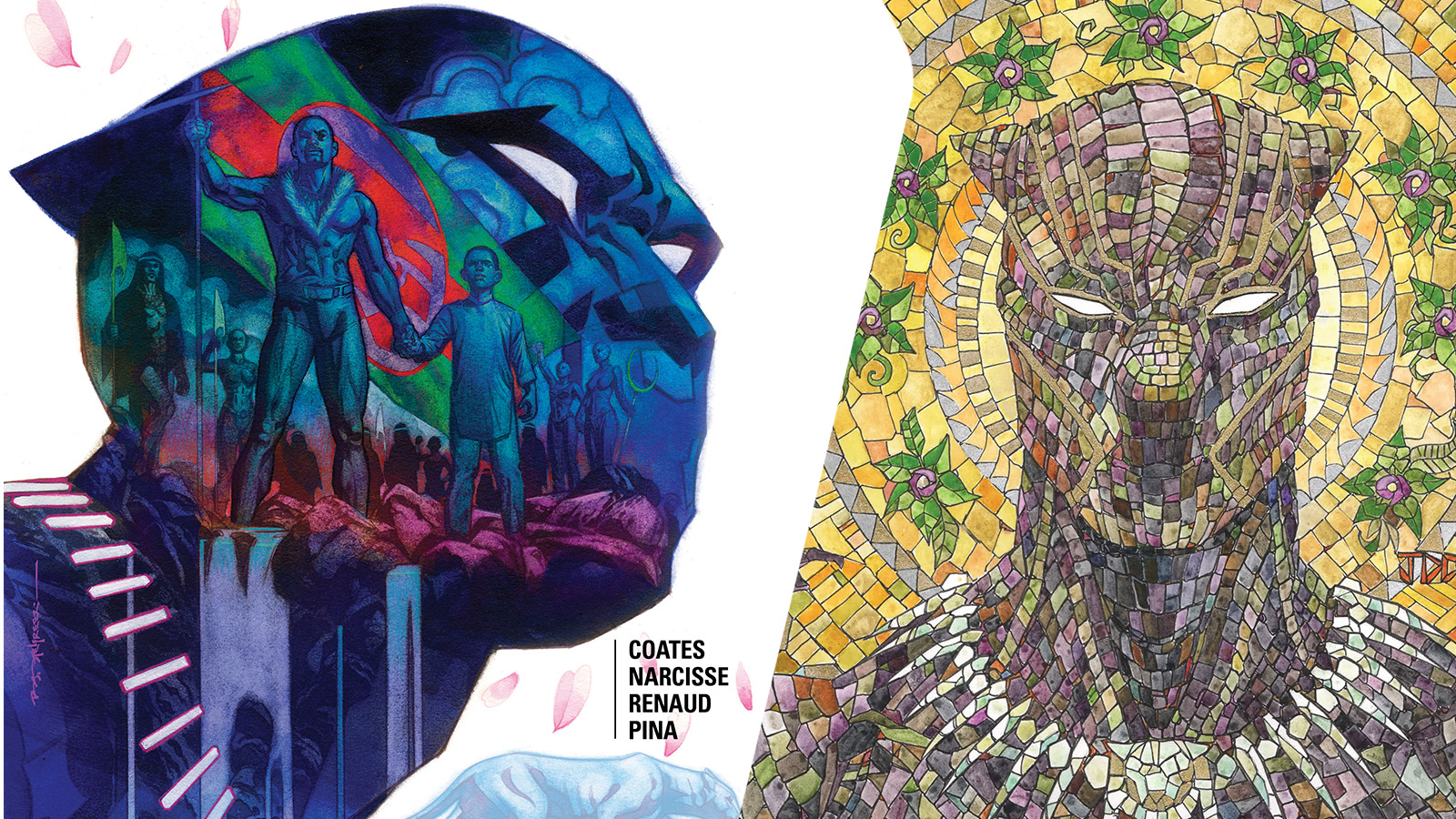
Black Panther #1 — Brian Stelfreeze’s 2016 Cover
Brian Stelfreeze didn’t need a crowded action scene to make his 2016 Black Panther #1 cover feel important.
His stance, the suit, and the atmosphere do most of the work here — calm, controlled, fully aware of the weight he’s carrying. This issue launched the Ta-Nehisi Coates era of Black Panther, which brought new attention to Wakanda’s politics, its people, and the burden of kingship, and the cover matches that tone exactly. T’Challa looks less like a hero racing into battle and more like a ruler preparing for the cost of leadership.
It’s one of the best modern entry points into the character — accessible, serious, and genuinely memorable to look at.
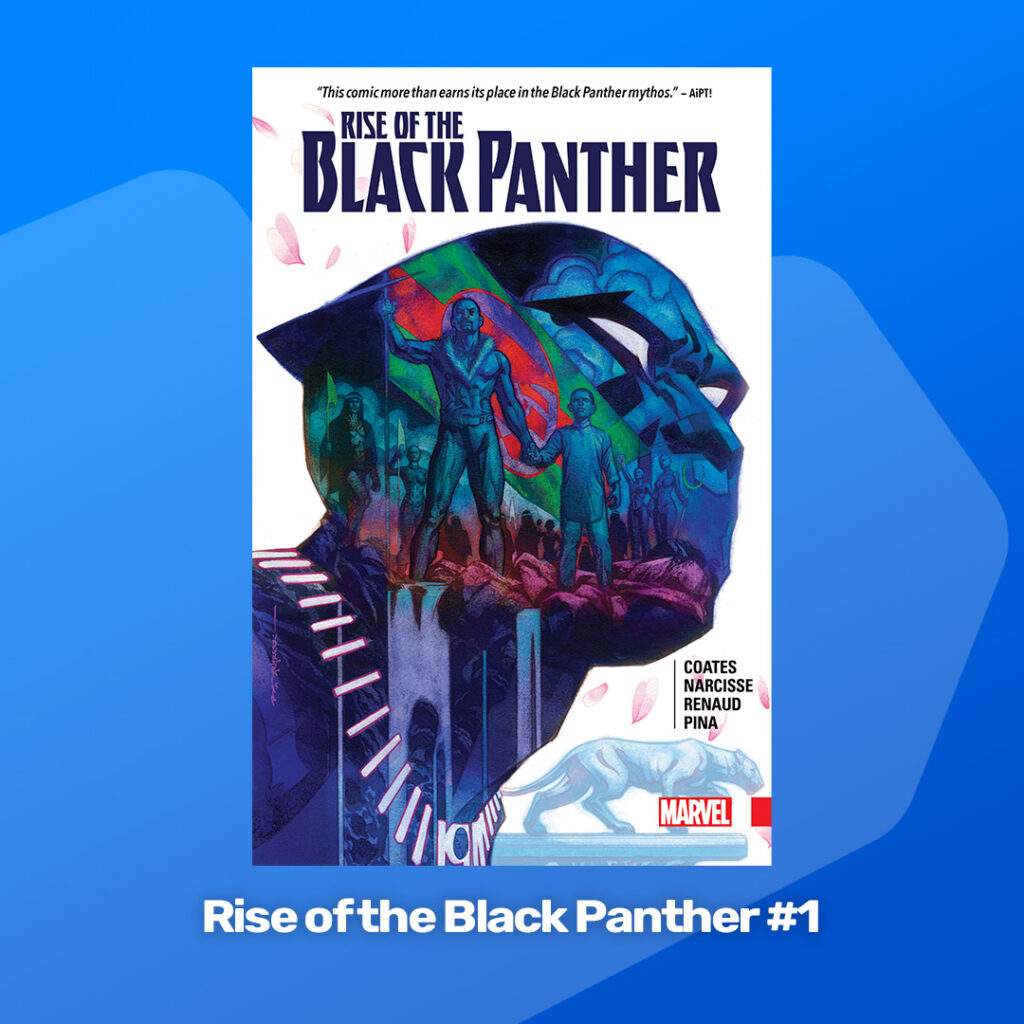
Rise of the Black Panther #1
Origin retellings are common in comics. This is one of the better ones.
Rather than pushing Black Panther in a new direction, the series looks back at his early years and reintroduces his origin for a modern audience, and the cover captures that idea directly — T’Challa as both a legendary figure and a character whose story is still being shaped. If Fantastic Four #52 is the first appearance, this is the more modern doorway: mystery, confidence, history, and a strong sense that Wakanda itself is part of the power behind the suit.
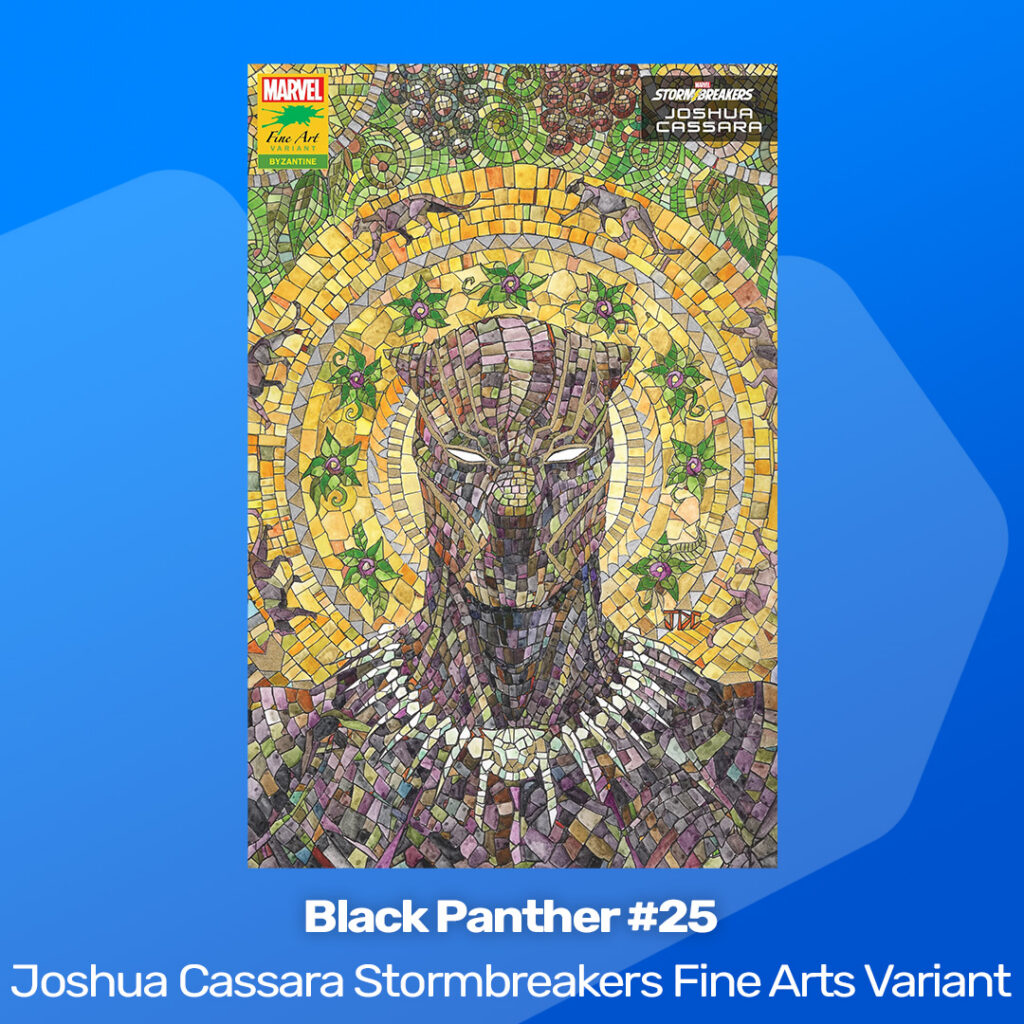
Black Panther #25 — Joshua Cassara Stormbreakers Fine Arts Variant
Ending a nearly decade-long run takes the right cover, and Joshua Cassara’s Stormbreakers variant for Black Panther #25 delivers one.
Closing out Ta-Nehisi Coates’ long run on the character, Cassara’s piece draws from a Byzantine-inspired style that fits T’Challa surprisingly well — gold tones, symmetry, an icon-like composition that makes him feel less like a superhero caught mid-fight and more like a royal figure preserved in history. Black Panther’s visual identity has always carried more than the suit: the throne, the nation, the ancestry, the responsibility. This variant leans into all of it.
It’s quiet, not loud, but it has real presence — the kind of cover built for display.
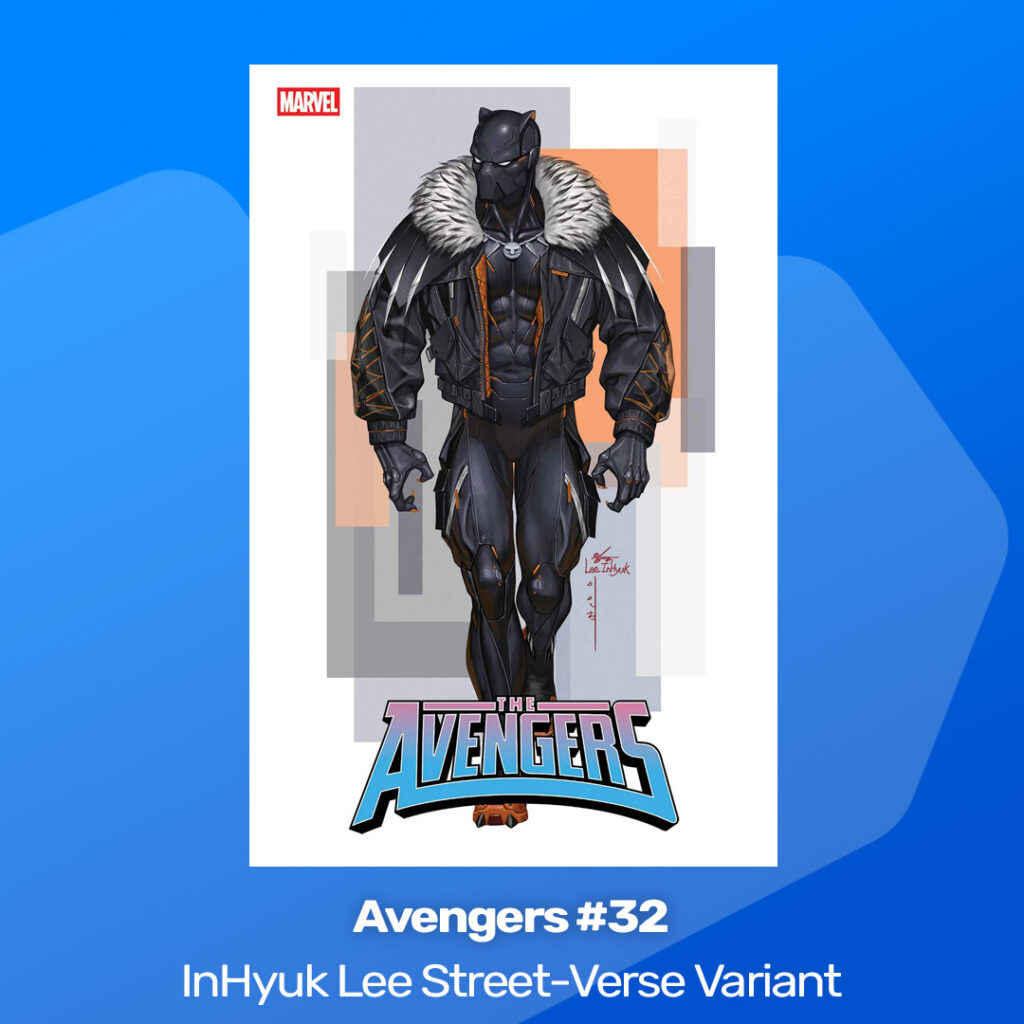
Avengers #32 — InHyuk Lee Street-Verse Variant
You won’t find this one on a Black Panther series at all — InHyuk Lee’s Street-Verse variant comes from an Avengers #32 cover, and it’s still unmistakably T’Challa’s moment.
The Street-Verse concept reimagines Marvel heroes through street fashion and futuristic design, and Black Panther is a natural fit — he already sits at the crossroads of tradition, technology, royalty, and style. Lee’s version pushes that into a more fashion-forward space without losing what makes the character recognizable, and it’s a good reminder that artists are still finding fresh ways to interpret him decades in.
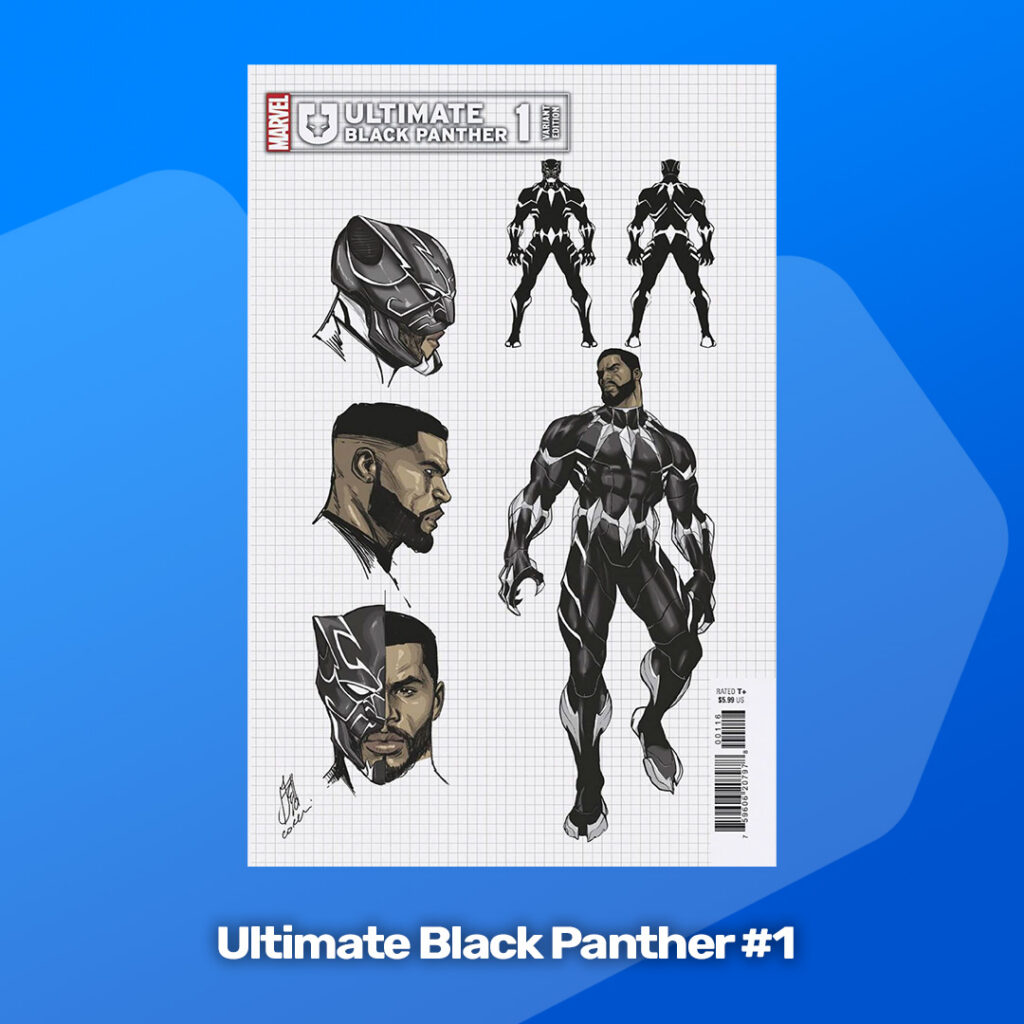
Ultimate Black Panther #1 — Stefano Caselli’s 2024 Cover
Marvel’s Ultimate line gave T’Challa a clean reset in 2024, and Stefano Caselli’s cover made the most of it.
The issue reintroduces Black Panther in a different continuity while keeping the essentials intact — Wakanda, secrecy, power, leadership, the pressure of the mantle — and Caselli’s cover feels clean and contemporary without losing any of the weight T’Challa needs the moment he appears. First issues in new universes tend to become natural collector markers, and this is one of them: a familiar hero getting a genuinely new starting point.
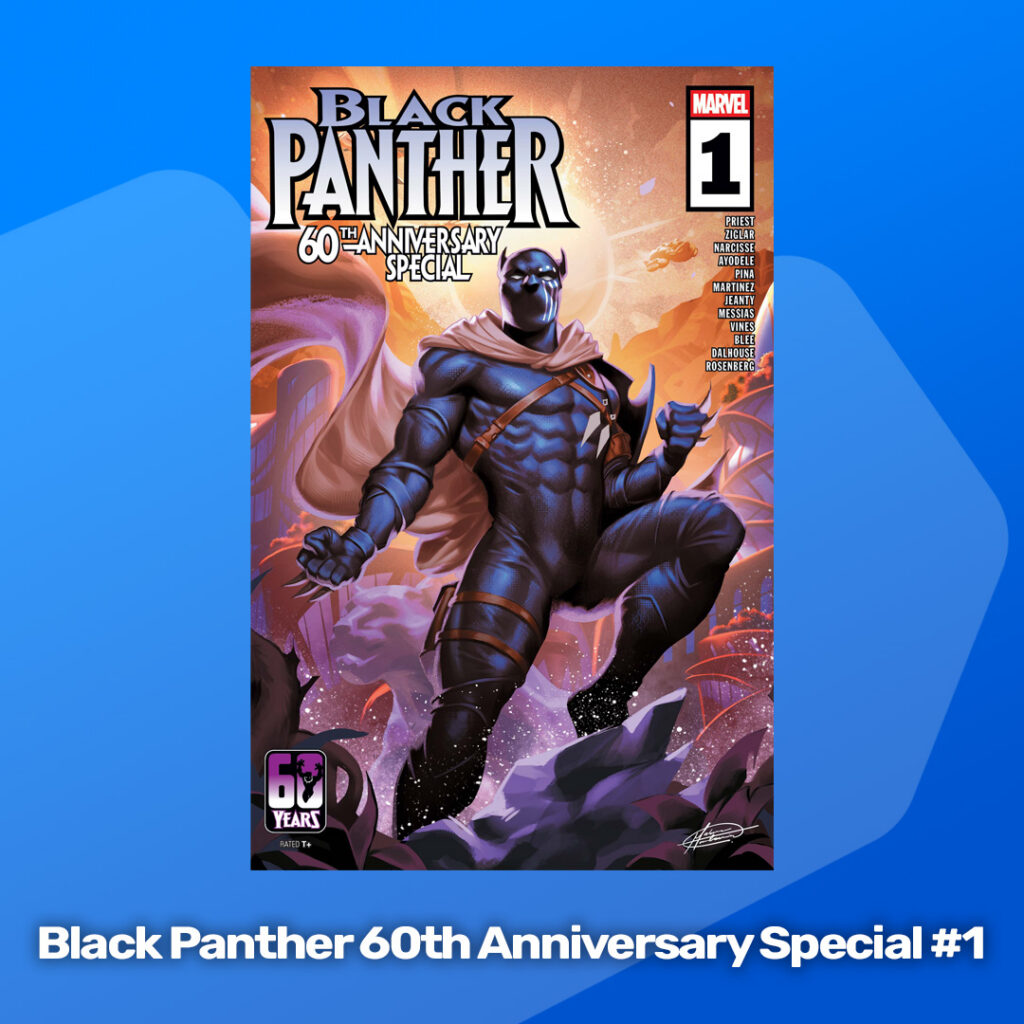
Black Panther 60th Anniversary Special #1
Every anniversary needs a cover that earns the occasion, and this is 2026’s.
After first appearances, solo milestones, Shuri’s time as Black Panther, modern relaunches, and collector-focused variants, this issue pulls everything back to the bigger picture. A 60th anniversary cover isn’t only about one comic — it’s a marker of how far the character has come and how much he’s meant to readers across generations. Black Panther has grown from a mysterious new hero in Fantastic Four #52 into one of the most important characters in comics, and this cover points as much toward what’s next for Wakanda as it does back at everything that got the character here.
Black Panther Comics for Sale on VeVe
The best Black Panther comic book covers aren’t all important for the same reason. Fantastic Four #52 changed Marvel history. Jungle Action #6 and Black Panther #1 pushed T’Challa deeper into a world that was fully his own. Others earn their place by showing how different artists have interpreted him — through royalty, fashion, fine art, or an entirely new universe.
That variety is what makes Black Panther comics genuinely rewarding to collect. A great cover can show the warrior, the king, the brother, the scientist, the ruler, the symbol, or the nation behind the mask.
For collectors exploring Marvel digital comics on VeVe, Black Panther offers a rich visual history to revisit, from early appearances to modern variants and anniversary releases. In 2026, that legacy feels bigger than ever — and the covers above are a strong place to start, however you like to collect.